
What does angioplasty treat?
Coronary angioplasty — also called percutaneous coronary intervention, or PCI — is one of the most common procedures used to treat blocked or narrowed coronary arteries, the blood vessels that supply the heart muscle itself.
Coronary artery disease develops when fatty deposits, called plaque, build up inside the arteries that feed the heart. Over time, this narrowing can reduce blood flow enough to cause chest pain (angina), and a sudden blockage can trigger a heart attack. Angioplasty is used both for planned, non-emergency narrowing and as an emergency treatment during a heart attack, where restoring blood flow quickly limits damage to the heart muscle.
How the procedure works
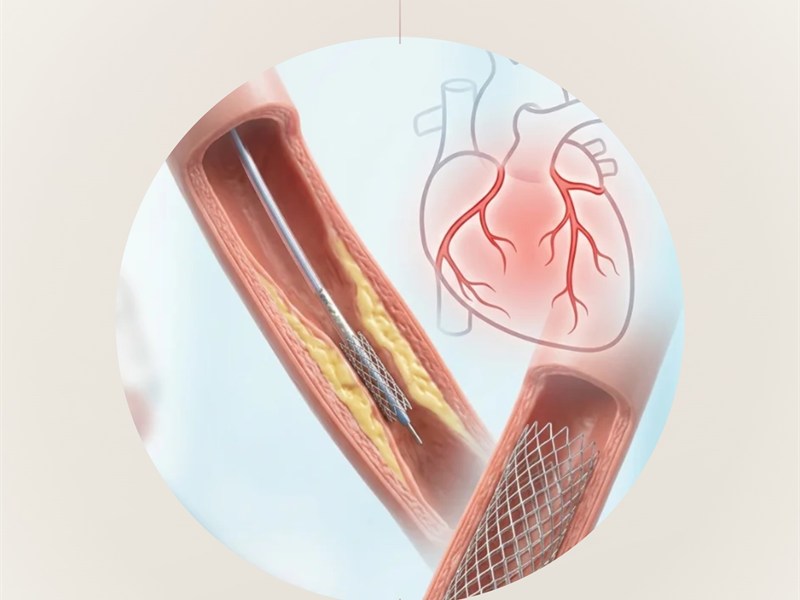
A thin tube called a catheter is guided through a small entry point in the wrist or groin, up to the blocked artery. A tiny balloon at the tip is inflated to press the plaque outward and reopen the artery. In most cases, a small mesh tube called a stent is left in place to hold the artery open. Many procedures today are guided by intracoronary imaging (IVUS or OCT) or pressure measurements (FFR), which help confirm exactly where treatment is needed and whether the result is good enough.
What to expect afterward
Angioplasty is minimally invasive, and most patients go home within a day or two. You'll typically be prescribed blood-thinning medication for a period afterward to reduce the risk of clotting around the stent, and your cardiologist will talk through lifestyle changes — diet, activity, smoking cessation, and management of blood pressure, cholesterol, and diabetes — that matter just as much as the procedure itself for long-term heart health.
Questions worth asking your cardiologist
- Is angioplasty the right option for my specific blockage, or would medication or bypass surgery be more appropriate?
- Will I need a stent, and if so, what type?
- How long will I need blood-thinning medication afterward?
- What symptoms should prompt me to seek help after the procedure?
This article is for general education and isn't a substitute for a consultation. If you have chest pain, shortness of breath, or other symptoms of heart disease, speak to a cardiologist about whether further evaluation is needed.