
What we're talking about
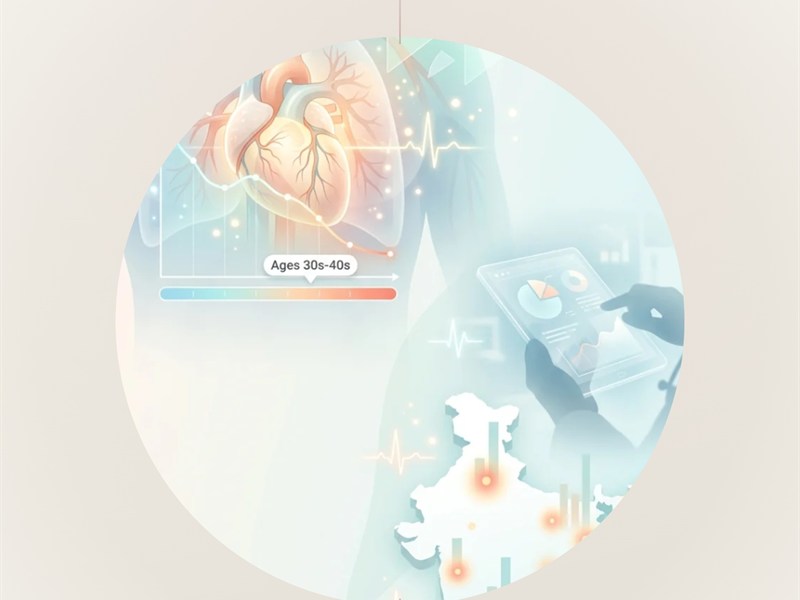
There's a pattern showing up repeatedly in Indian cardiology data right now: heart attacks are no longer an "after-60" event. A 2025–26 industry survey of nearly 300 cardiologists across India found that three in four reported most of their patients are now under 50, and over a third said patients aged 31–40 already have cardiac issues. Separately, the Indian Heart Association has long reported that Indians tend to develop coronary artery disease 5–10 years earlier than Western populations.
How does this relate to you
If you're in your late 20s to 40s in urban India and think of heart disease as "something for later" — that assumption is exactly what's being challenged. Long sitting hours, high-stress jobs, disrupted sleep, smoking or vaping, and a diet shifted toward processed and fried food are compounding with a genetic predisposition Indians already carry toward early coronary disease.
What this means for the patient
Two things matter more than age here: your numbers, and your family history. Cholesterol, blood sugar, blood pressure, and waist circumference can start drifting into risk territory well before you feel anything. Indian patients are also more likely to have a "silent" presentation — high blood pressure or early blockage with no obvious symptoms — which is part of why diagnosis often comes late.
Red flags — when to see a cardiologist
Don't wait for a dramatic chest-clutching moment. See a doctor promptly for:
- Chest discomfort, tightness, or heaviness — even if mild or comes and goes
- Unusual fatigue or breathlessness during activities that didn't used to tire you
- Pain radiating to the jaw, arm, or back, especially with sweating
- A family history of heart attack or sudden cardiac death before age 50–55
Questions to ask your doctor
- "Based on my age, should I get a baseline lipid profile and HbA1c now rather than waiting?"
- "Do I need an ECG or calcium score given my family history?"
- "What's realistic for me in terms of 10-year cardiovascular risk?"
This article is for general education and isn't a substitute for a consultation. If you have chest pain, breathlessness, or other symptoms, speak to a cardiologist about whether further evaluation is needed.